Start with the change you expect mentoring to make
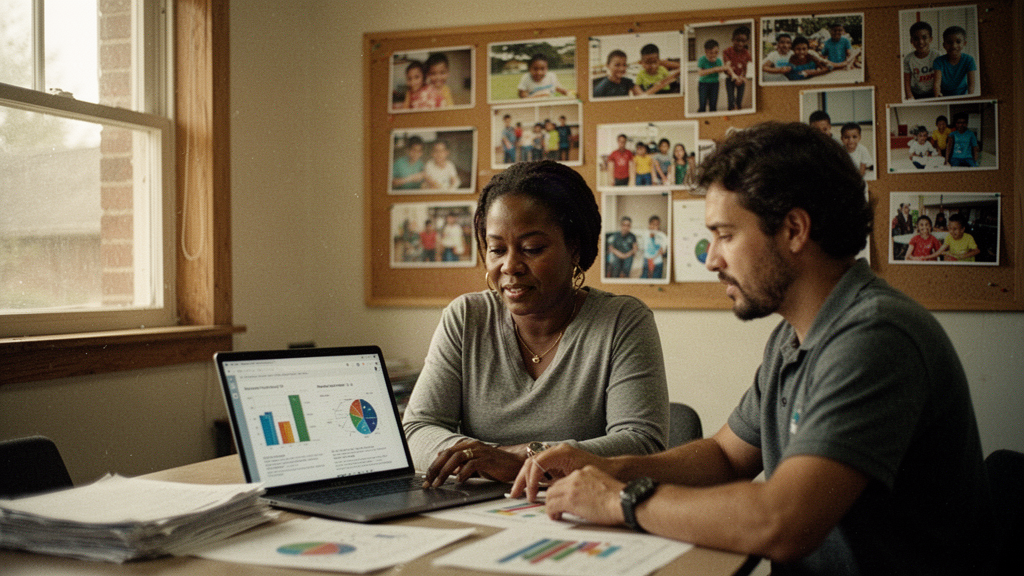
Mentoring program outcome measurement is most useful when it begins with a clear question: What change should this program help young people experience, and how would you know? For funders, that question is more actionable than asking only how many youth enrolled or how many mentor meetings took place. Participation and contact measures show whether a program is operating; outcome measures help explain whether it is contributing to the results it set out to support.
The answer should reflect the program’s purpose and the young people it serves. A program focused on academic persistence might track whether participants feel more confident seeking help or stay engaged in school. A program emphasizing social connection might examine whether youth report having a trusted adult or feel a greater sense of belonging. These are possible outcomes, not guarantees that mentoring alone caused a change.
- Ask the grantee to describe the youth population, program model, and intended duration of mentoring.
- Identify a small number of near-term outcomes that connect plausibly to the activities.
- Separate outcomes the program can reasonably influence from longer-term goals shaped by many factors.
Review the logic behind the measures
A useful measurement plan connects resources and activities to outcomes. For example, trained mentors and regular meetings may support a consistent relationship; that relationship may help a young person feel more supported; increased support may contribute to progress toward a broader goal. The sequence is a working explanation, not proof of cause and effect. Ask the organization to make its assumptions visible, including what needs to happen for each link to hold.
Then check whether each measure fits the outcome. Meeting logs can show contact frequency, but they do not establish trust or belonging. A youth survey may capture a participant’s perspective, but it may not explain why an answer changed. Strong plans use measures that match the question and, where appropriate, combine different kinds of evidence.
- For each proposed measure, ask what it captures, who provides the information, and when it is collected.
- Use administrative or attendance records for participation and continuity, not as substitutes for youth experience.
- Consider short surveys, structured reflection, interviews, or focus groups when they are appropriate and feasible.
- Ask how the program will include youth who leave early or miss follow-up, rather than reporting only on continuing participants.
Look for credible, interpretable evidence
Funders do not need every mentoring program to conduct a complex evaluation. They do need enough information to judge whether reported results are clear, relevant, and interpreted carefully. Review the starting point, follow-up period, number and characteristics of respondents, and any important gaps in the data. If a program reports improvement, ask how it calculated that change and whether the same participants answered at both points.
Interpretation matters as much as collection. A positive result may be encouraging while still leaving questions about who benefited, how consistently, and what else may have influenced the outcome. If a program compares participants with a different group, ask whether the groups were meaningfully comparable. Without a suitable comparison, frame findings as changes observed during participation—not as proof that mentoring caused those changes.
Check whether results are broken out in ways that help the organization understand different experiences, while protecting young people’s privacy. Small groups can be identifiable even when names are removed. The organization should explain how it limits access to sensitive information and avoids sharing details that could expose an individual.
- Request the measure, collection schedule, response information, and a plain-language explanation of analysis.
- Ask what the data cannot tell you, as well as what it suggests.
- Review whether missing responses, participant turnover, or changes to the program could affect conclusions.
- Avoid treating a single score or headline result as a complete account of program quality.
Make reporting proportionate and useful
A reporting request should fit the size, maturity, and capacity of the grantee. Requiring many indicators can create paperwork without improving decisions. Agree on a focused set of measures before funding begins, clarify definitions, and decide how often results will be reviewed. This makes it easier to compare reports over time and reduces the chance that organizations spend more effort formatting data than learning from it.
Use reporting conversations to ask what the findings mean for program practice. If mentor continuity appears to be a challenge, discuss whether recruitment, training, matching, or support could be adjusted. If youth describe stronger relationships but no movement on a longer-term outcome, that may indicate a need to revisit the program’s assumptions or allow more time—not necessarily that the work has failed.
Treat unexpected or mixed findings as information for improvement. A funder can invite grantees to explain what they changed, what they learned, and what support would help them measure responsibly. That approach encourages honest reporting and keeps measurement connected to the purpose of the investment.
Questions to bring to a funding conversation
Keep the final measurement plan focused, feasible, and open to revision as learning accumulates. Before publication, have program and evaluation staff review the measures and reporting language for accuracy, privacy, and appropriate claims.
- What outcome matters most to participants, and how did the program choose it?
- Which measure will indicate progress, and what are its limitations?
- How will youth perspectives shape interpretation and program changes?
- What resources or expertise are needed to collect and use the information well?
- How will findings be shared with participants, families, staff, and the funder?
COMMON QUESTIONS
Frequently asked questions.
GO FURTHER